Congenital Heart Disease in Dogs: Signs & Outlook (Vet Verified)

Hearing that your dog may have a heart condition, especially one present from birth, can feel overwhelming. Congenital heart disease in dogs varies widely, from mild conditions that never cause problems to more serious defects requiring lifelong care. The key is understanding what to watch for, what it means for your dog’s future and how early monitoring can make a real difference.
Congenital Heart Disease in Dogs – What You Need To Know
Congenital heart disease in dogs refers to structural heart defects present at birth. Some dogs show symptoms early, while others remain symptom-free for months or years. Signs can include exercise intolerance, breathing changes or fainting. Prognosis varies widely, but early diagnosis and consistent monitoring can significantly improve outcomes and quality of life.
Key Takeaways
- Congenital heart disease in dogs is present at birth but may not show signs immediately
- Symptoms often include reduced activity, breathing changes or fainting episodes
- Severity varies greatly. Some dogs live normal lives, others need treatment
- Diagnosis relies on imaging, especially echocardiography
- Monitoring trends in breathing and activity is key to detecting progression early
What Is Congenital Heart Disease in Dogs?

Congenital heart disease in dogs refers to structural abnormalities in the heart or major blood vessels that develop before birth. These defects occur during fetal development and can affect how blood flows through the heart.
Some defects are simple and may never cause noticeable issues. Others are more complex and can lead to serious complications like heart failure or reduced oxygen delivery to the body.
Importantly, “congenital” does not always mean inherited. Some conditions arise spontaneously, although certain defects can be passed on genetically.
Common Types of Congenital Heart Defects
There are many forms of congenital heart disease in dogs, but a few are more commonly diagnosed:
- Patent ductus arteriosus (PDA) – abnormal blood flow between major vessels
- Subaortic stenosis (SAS) – narrowing below the aortic valve
- Pulmonic stenosis (PS) – obstruction of blood flow to the lungs
- Ventricular septal defect (VSD) – hole between heart chambers
- Valve dysplasia – malformed heart valves
These conditions can range from mild to severe and some dogs may have more than one defect at the same time.
“I got the Maven sensor for my 14-year-old Chihuahua mix with heart and trachea issues. It gave me back peace of mind – I can track her RRR, BPM, drinking, and activity anytime and know instantly if something’s wrong. Highly recommend!”

★★★★★
Chiara De Luca
Titti
Congenital Heart Disease in Dogs: Symptoms to Watch For
One of the challenges with congenital heart disease in dogs symptoms is that many dogs appear normal early in life. In fact, a heart murmur is often the first clue detected during a routine vet visit.
As the condition progresses, symptoms may include:
- Exercise intolerance (tiring easily, slowing down on walks)
- Lethargy or reduced activity
- Rapid or labored breathing (tachypnea or dyspnea)
- Coughing
- Fainting (syncope)
- Poor growth in puppies
- Cyanosis (bluish gums, indicating low oxygen levels)
“Some dogs with congenital heart disease show signs early in life, while others may appear normal for months or years. Monitoring trends in breathing and activity can help detect when the condition begins to impact daily life.” – Joana Babo, DVM, Veterinarian at Maven Pet
Because symptoms can be subtle at first, small changes like slightly faster breathing at rest can be important early warning signs.
How Vets Diagnose Congenital Heart Disease
Diagnosing congenital heart disease in dogs involves several steps, often starting with a routine exam.
1. Physical examination
- Detection of a heart murmur is the most common first sign
- Pulse quality and heart sounds can provide additional clues
2. Imaging and tests
- Echocardiography (ultrasound) – the gold standard for diagnosis
- X-rays – evaluate heart size and lung involvement
- Electrocardiogram (ECG) – assess heart rhythm
Echocardiography is especially important because it allows vets to identify the exact defect, assess severity and guide treatment decisions.
Congenital Heart Disease in Dogs Life Expectancy

The congenital heart disease in dogs’ life expectancy depends heavily on the type and severity of the defect.
- Mild defects: Dogs may live normal healthy lives with little or no intervention
- Moderate conditions: May require monitoring or treatment but still allow good quality of life
- Severe defects: Can lead to heart failure, reduced lifespan or complications early in life
Some conditions can be successfully treated, significantly improving prognosis. Others may require lifelong management.
Early detection plays a major role. Dogs diagnosed and monitored early often have better outcomes than those diagnosed later.
Treatment and Long-Term Management
Treatment for congenital heart disease in dogs varies depending on the condition.
Common approaches include:
- Monitoring only (for mild, asymptomatic cases)
- Medications to manage symptoms or stabilize heart function
- Minimally invasive procedures (e.g., catheter-based corrections)
- Surgery for certain defects
In some cases treatment is aimed at improving quality of life rather than curing the condition.
What Owners Should Monitor at Home
Tracking your dog’s health at home is one of the most effective ways to detect changes early.
Key things to monitor:
- Resting respiratory rate (RRR)
- Heart rate trends
- Daily activity levels
- Sleep quality and rest patterns
- Energy and behavior changes
Subtle shifts like gradually increasing breathing rate or decreasing activity can indicate progression before obvious symptoms appear.
How Maven Helps Track Heart Health Early
A pet health tracker can play a critical role in managing heart conditions over time.
The pet health app from Maven works alongside its dog health tracker to continuously monitor:
- Heart rate
- Activity and rest patterns
- Resting respiratory rate
- Scratching and water intake
Dogs with congenital heart disease may show gradual increases in resting respiratory rate, reduced activity or changes in heart rate trends before visible symptoms appear.

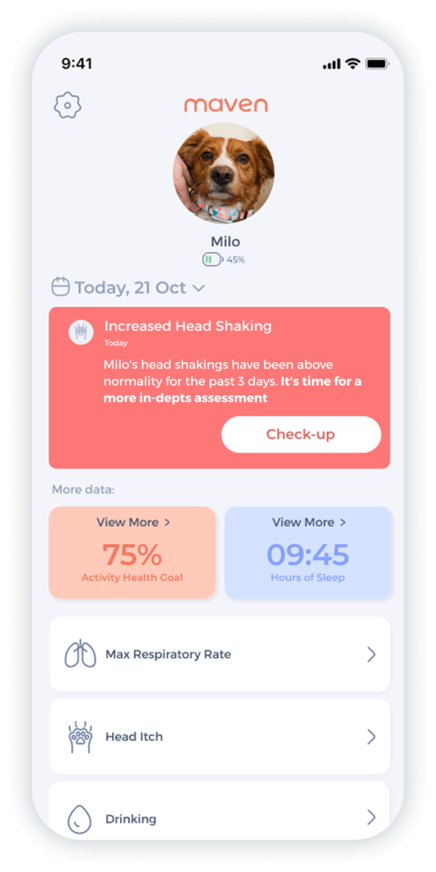
Monitor heart rate, respiratory rate, activity & rest, drinking, itch behavior.
Maven establishes a personalized baseline and alerts you to deviations, helping you act earlier and support your dog’s long-term health.
You can also learn more about related conditions like dog heart disease and how monitoring tools support early detection.
FAQ (Vet-Reviewed)
It is a structural defect of the heart present at birth that affects how blood flows through the heart and body.
Common symptoms include exercise intolerance, fast breathing, coughing, fainting and poor growth, although some dogs show no early signs.
Life expectancy varies widely. Some dogs live normal lives, while others with severe defects may have a shorter lifespan.
Yes, some conditions can be treated with medication, procedures or surgery, while others are managed through monitoring and supportive care.
Conclusion
Congenital heart disease in dogs can sound frightening, but it’s important to remember that not all cases are severe. Many dogs live happy, active lives, especially with early diagnosis and proper monitoring.
Understanding the signs, knowing what to expect, and tracking subtle changes over time can make a meaningful difference. With the right tools and veterinary support, you can stay one step ahead and help your dog live their best possible life.
Maven Pet focuses on improving the quality of life of our pets with technology, using artificial intelligence (AI) to enable proactive pet care. By accurately collecting and monitoring pet data 24/7 and flagging any irregularities, Maven Pet empowers pet parents and veterinarians to stay ahead of potential health issues, ensuring the well-being and longevity of our beloved companions.